About Us


Powering the Gulf’s Economy Through Renewable and Battery-Based Electricity Exports
Robin Mills, CEO, Qamar Energy
Long-Term Economic and Policy Implications of Kuwait’s Heavily Subsidized Electricity Sector
Jim Krane, Fellow in Energy and Geopolitics at Rice University's Baker Institute
Experience of 25 years European Power Markets, Lessons for GCC
Jan Haizmann, Secretary General ZETA
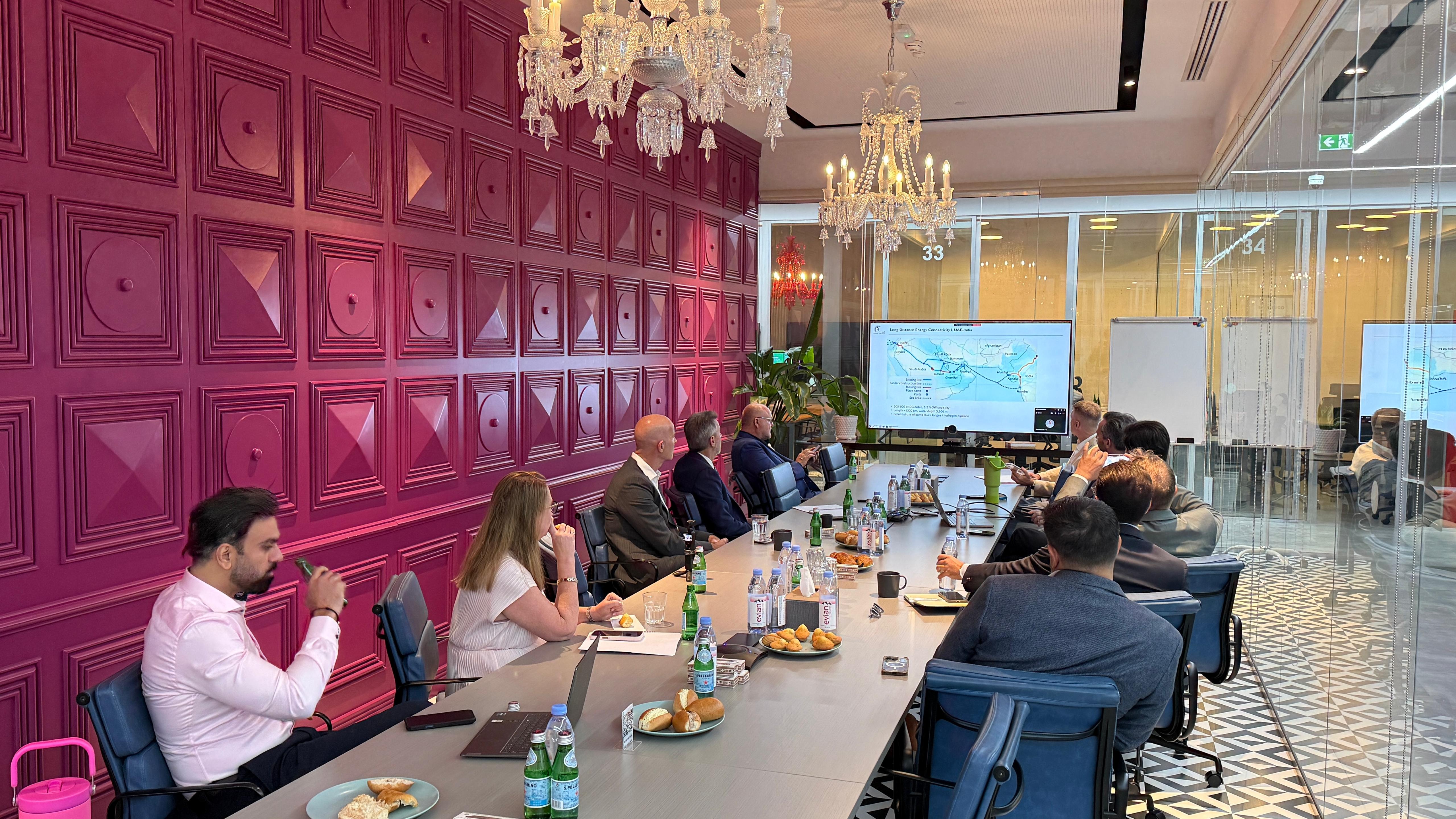
ZETA gathered energy experts to look closely at the GCC power market. In a roundtable discussion in Abu Dhabi this week, they considered the significant benefits of a regional market for electricity and the challenges facing its development.
Three speakers led the discussion.
Robin Mills, CEO, Qamar Energy, drew on research that shows how the GCC market has worked so far and what can be gained in a more integrated market.
Jim Krane, Fellow in Energy and Geopolitics at Rice University’s Baker Institute, spoke about the economic and policy implications of electricity subsidies in Kuwait, with comparisons to other GCC countries.
Jan Haizmann, Secretary General, ZETA, described a 25-year evolution of European power markets and suggested how aspects of this history might be helpful in the Gulf region.
Robin Mills saw the region’s remarkable progress in low-cost renewable power and batteries as a solid platform for robust regional power trade.
“There are certainly billions of dollars of value to be generated or saved from trade in the GCC, even more in exports to the near neighbors, and perhaps further exports to India and Europe,” he said.
The backbone is already in place, with GCCIA operating for more than ten years with good technical ability. Now, with large deliveries of power to Kuwait and impending deliveries to Iraq and Egypt, the regional system is beginning to function more like a trading system, not just as a balancing mechanism.
Robin referred to recent research from KAPSARC, which sees potential for Saudi Arabia to become a big power exporter by 2030 with its large renewable capacity.
Further progress with depend on creating more market mechanisms to convey a clear market price for electricity. Oman is a leader, having just launched trade in its electricity market.
And countries will have to reform subsidies to allow transparent pricing, including electricity subsidies to end users and in the wholesale market for natural gas.
Jim Krane delved into the subsidy issue with discussion of Kuwait that draws on research with Kuwaiti colleagues.
The low electricity tariff in Kuwait causes very high per capita demand, leading to the use of expensive fuel oils in the power sector that could be sold for revenue. Meanwhile the revenue provides the government with just 5% of the cost of generating the power, adding to budget deficits.
“Kuwait is an extreme case,” said Jim. “But it reflects somewhat on the rest of the GCC.”
Jim and colleagues propose three scenarios for reform including one scheme in which households get cash payments to pay electricity bills while the electricity price rises to cover cost.
They point to gains made by Saudi Arabia, which is a leader in subsidy reform that implements a tiered cost structure with cash payments to incentivize more efficient use.
“The Saudis show this can be done,” he said.
Jan Haizmann described the struggles of the EU to create a continental power market since the 1990s.
Europe’s wholesale power market is now a fully transparent system of exchanges and brokers providing electricity and gas prices at any point in time in any EU country.
Arriving at this point required a long process to accommodate national regulators and system operators. Each country continued with a unique generation mix with different marginal costs, opening the way for trade across borders. The trade optimizes supply with efficient price finding and helps to attract investment.
The benefits a clear with a $1 Trillion financial market in the EU today paired with a large carbon market.
“Such markets could become very active here in this region,” said Jan. “With auctions that enable physical exchange of electricity across borders brokered among the utilities or on centralized platforms.”
After three hours of discussion a cautious optimism prevailed, with a general consensus that countries of the GCC can continue to build on actions they’ve already taken to create a regional power market that supports countries’ economic and environmental goals.
You can find the recording here.